

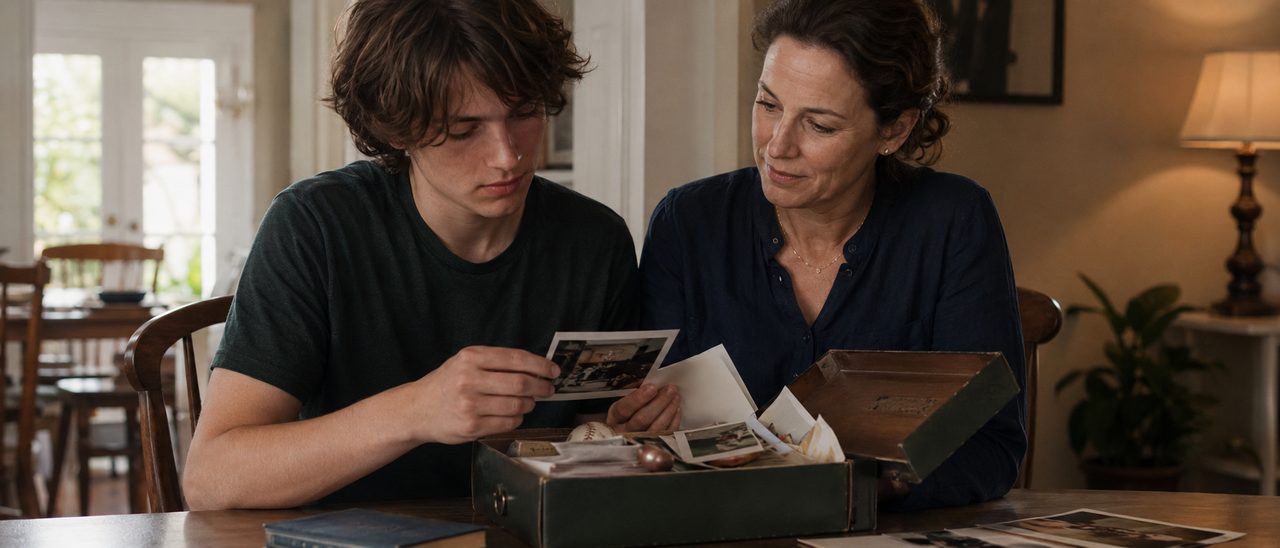
Turning 18 holds a particular place in the family imagination. It is not just another birthday. It is a threshold. An age when one officially becomes an adult, even if, in the eyes of their parents, they often remain the child they watched grow up too quickly.
On this occasion, many parents look for a gift worthy of the moment. A piece of jewellery, a watch, a trip, a sum of money, a computer, a car when the budget allows it. These gifts can be useful, beautiful, memorable. But they all share the same limit: they belong to the present. They respond to a need, a desire, a stage of life. They bring joy in the moment, sometimes for a long time, but they do not necessarily tell the story of the child becoming an adult.
Yet at 18, the most precious thing one receives is not always the most expensive. Sometimes, it is what allows us to understand where we come from.
Why material gifts are not always enough
Giving a gift to your child for their 18th birthday often puts parents under a certain pressure. They have to find something important, symbolic, memorable. The gift should mark the passage into adulthood without being too solemn. It should bring joy without becoming a gadget. It should be personal, while still suited to a young adult who already has their own tastes, desires and references.
In this search, objects seem reassuring. They are concrete. You can wrap them, hand them over on the day itself, see an immediate reaction. But even a well-chosen object does not always carry a family memory. It rarely says everything parents went through, observed and felt during the first eighteen years of their child’s life.
A child celebrating their 18th birthday often receives things for their future: a computer for studies, help with a driving licence, money for a project, a trip to mark the occasion. It makes sense. Adulthood is beginning, and the gift accompanies this departure.
But a deeper dimension may be missing: a look back at the path already travelled.
Parents have seen what the child cannot remember. The first years, the funny sentences, the tiny fears, the habits, the details of character already present very early on, the small apparently insignificant moments that, in hindsight, say a great deal. This material cannot be bought. It is preserved.
What a child does not see while growing up
Growing up means living your story from the inside. We remember certain events, a few strong images, atmospheres, places, people. But a large part of childhood escapes the person who goes through it.
The first years are told by others. Parents know how the child slept, how they laughed, how they pronounced certain words, what made them cry, what obsessed them for a time. They sometimes remember a tiny anecdote with surprising precision: a remark in the car, a tantrum over a toy, a sentence said at the table, a gesture repeated for months.
These memories are not always spectacular. They would not necessarily deserve a major family video or a printed album. And yet they have immense value, because they give access to a part of oneself that one cannot reconstruct alone.
At 18, receiving these fragments can have a particular impact. Adulthood often begins with a projection forward: studies, work, independence, a possible departure from the family home. Looking back at childhood at this precise moment does not mean holding the child back in the past. On the contrary, it can offer them a form of grounding.
A young adult does not only need to be encouraged to leave. They may also need to feel that a story preceded them, accompanied them and observed them with care.
The power of a memory told by parents
A photo alone can move us. A photo that is told can be overwhelming.
The difference sometimes lies in a few sentences. An image of a child in a garden becomes stronger if we know it was taken on the day they walked to the gate for the first time. An ordinary video in a living room takes on another value if it contains the voice of a grandparent, the laugh of a sibling or a family atmosphere that has disappeared. A holiday photo can become a founding memory if a parent explains what they were feeling at that moment.
Family memories are not made only of images. They are made of context, details, interpretations and perspectives. What parents transmit is not only an archive. It is their way of having watched their child grow.
This point is essential. A memory chest is not a chronological album where the prettiest photos are piled up. It can be much simpler and much stronger: a few carefully chosen images, accompanied by a sincere sentence, an audio message, an anecdote, a parent’s memory.
It is not about telling an entire life. That would be too heavy, and probably impossible. It is rather about preserving moments that shed light on something: a personality, a stage, a relationship, a period.
This kind of gift does not seek to impress. It seeks to transmit.
What should you put in a memory chest?
The difficulty, when imagining this kind of gift, is believing that everything would have to be gathered together. All the important photos, all the videos, all the years, all the major events. This ambition can quickly become discouraging.
In reality, the fairest approach is often the opposite: choose little, but choose well.
A memory chest for an 18th birthday can contain one photo per year, or a few moments associated with key periods. A birth, a first day at school, a passion that appeared very early, a mischief that became funny with time, a family trip, a striking sentence, a personal victory, a difficult period overcome together.
The most precious memories are not always the ones we expect. An imperfect photo can tell the story of an entire era. A voice message can have more value than a long letter. A short video of everyday life can become more moving than a carefully edited montage.
It can also be worthwhile to vary the formats. An image shows. A text explains. Audio lets a voice be heard. Video brings back movement, presence, atmosphere. Together, these elements make it possible to build something more alive than a simple folder of photos.
The memory chest does not need to be perfect. Above all, it must be personal. That is what sets it apart from a purchased gift.
Why waiting until 18 changes the value of the gift
A memory given too early does not always have the same reach. At 8, 12 or even 15, a child may look at photos of themselves with amusement, embarrassment or indifference. They do not necessarily yet have the distance needed to understand what these images represent.
At 18, something shifts. Childhood is not so far away, but it is already beginning to become a separate territory. It can be looked at differently. One better understands that parents also lived those years from their side, with their worries, their fatigue, their tenderness, their awkwardness, their own memories.
It is this gap that gives the gift its strength.
The memory chest does not only say: “here are photos of you when you were little.” It says instead: “here is what we kept of you while you were growing up.” The nuance is important. It transforms an archive into a message.
And because the gift arrives at a pivotal moment, it can remain associated with this entry into adulthood. It becomes a way of transmitting without making a speech, of expressing attachment without necessarily putting everything into words on the day itself.
I'm sad I didn't start earlier, right from my son's birth. He's 10 now, and I would have had so much to share before. Time makes you forget the details: even if you can still tell your memories, it's not the same.
Émilie, 31Building the chest over time
One mistake would be to wait until the final month before the 18th birthday to try to reconstruct everything. It is possible, but the work quickly becomes heavy: finding the photos, asking for videos, searching through old phones, looking for the right dates, remembering anecdotes.
A memory chest becomes much simpler if it is built gradually. A photo added after a birthday. An audio message recorded after a meaningful moment. A few lines written the same evening, while the memory is still clear. A video set aside because it tells a period of life better than a long speech.
This approach changes everything. The final gift no longer rests on one large late effort, but on small gestures spread over time. A few minutes now and then are enough to build something that, years later, can have considerable value.
It is precisely here that a tool like KeepOne can find its place.
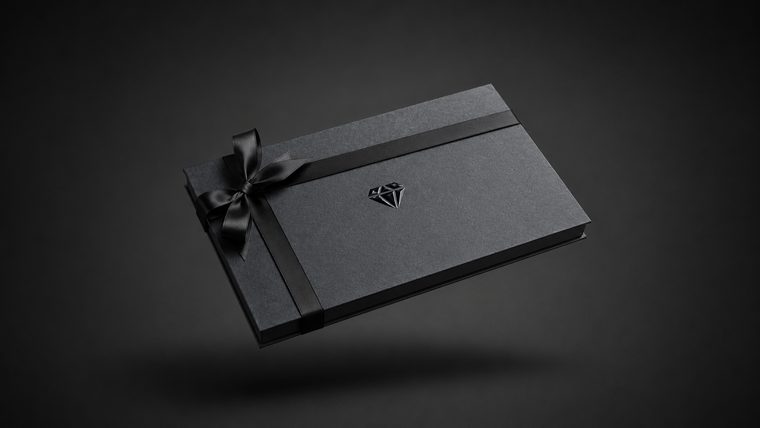
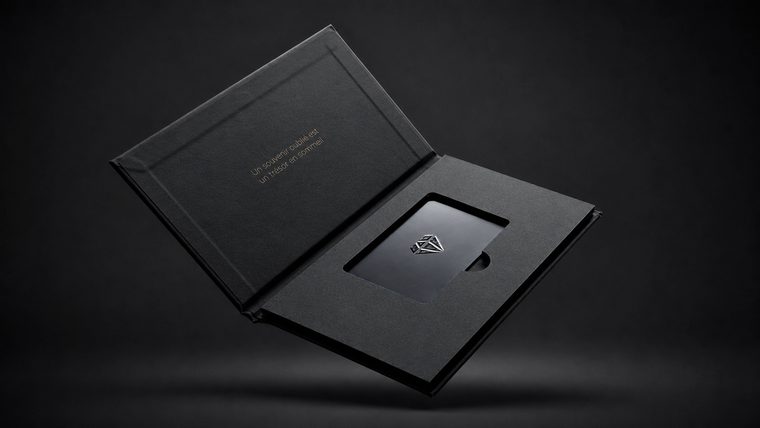
Not as a product to give instead of the gift, but as a support for preparing it. KeepOne makes it possible to set aside memories, accompany them with context, then preserve them so they can be found again or transmitted at the right moment. The application responds to a very concrete difficulty: not letting important photos get lost in the mass of the phone, and not waiting until it is too late to tell what they mean.
For a child’s 18th birthday, this logic makes full sense. It is not about building a family monument or a perfect album. It is about creating, over the years, a discreet space where a few chosen memories gain value.
A gift unlike the others
A material gift can be useful, beautiful, expected. It can even last a long time. But a memory chest has a different nature: it does not only satisfy an immediate desire, it reveals attention accumulated over time.
This kind of gift does not necessarily require a large budget. It mostly requires regularity, choice and a little sincerity. Perhaps that is what makes it so strong. It does not say “we bought something for you,” but “we kept something of you.”
At 18, that sentence can matter.
Because at that age, one often prepares to move forward, to leave childhood behind a little, to build one’s own path. Receiving memories chosen by one’s parents does not close that stage. On the contrary, it can give it depth.
The most beautiful gift is not always the one that impresses on the day of the birthday. Sometimes, it is the one we open slowly, keep, and understand more deeply over the years.
A memory chest belongs to that rare category: gifts that do not merely take up space in a bedroom, but in a story.